



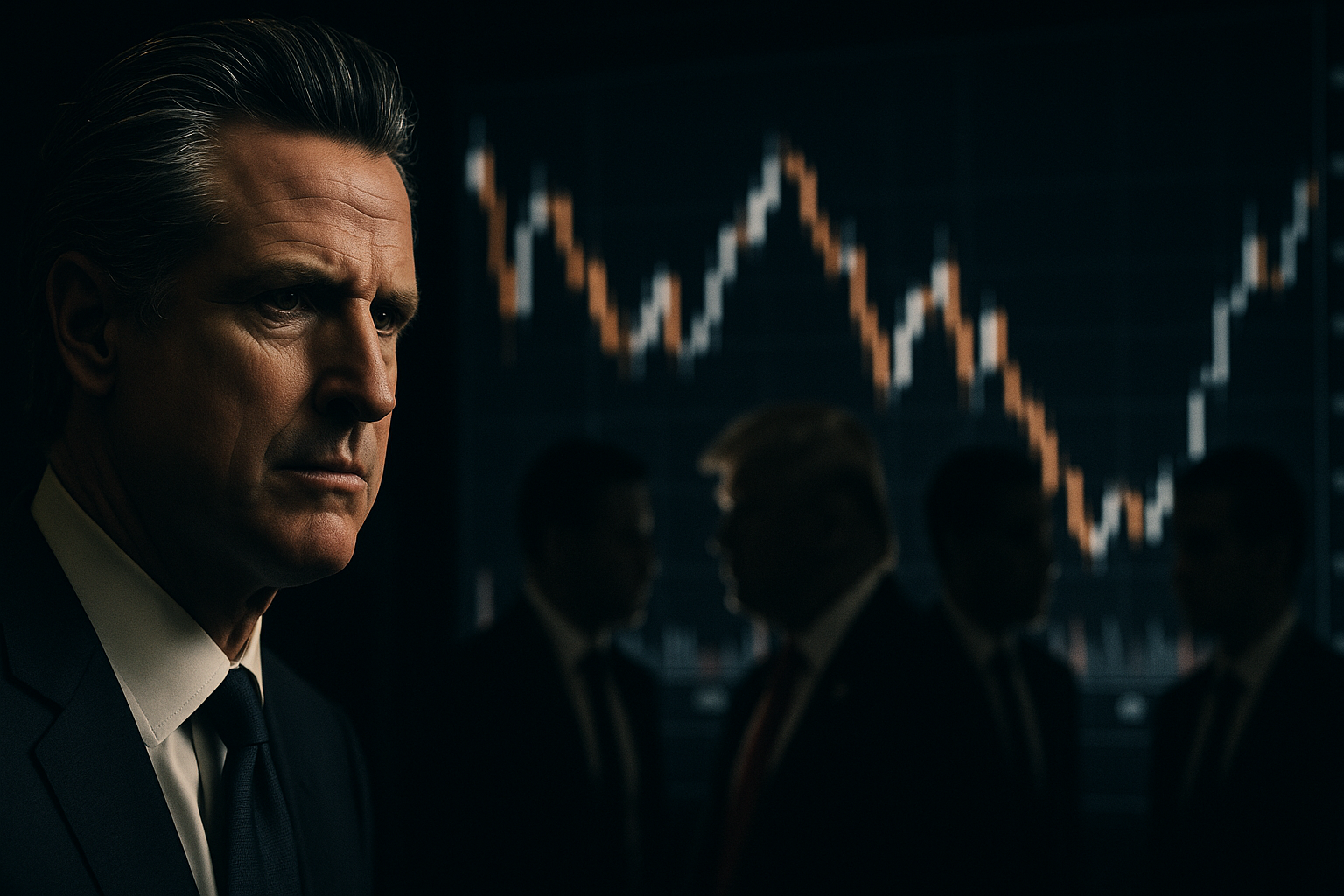
California Governor Gavin Newsom recently intensified political scrutiny on former President Donald Trump by emphasizing his connections to high-profile and controversial figures within the cryptocurrency space. This move comes amid Newsom’s growing prominence as a possible contender in the 2028 presidential election, utilizing heightened awareness surrounding crypto-related criminal convictions to appeal to a politically engaged electorate. By drawing attention to individuals like cryptocurrency exchange founder Sam Bankman-Fried and Ross Ulbricht—creator of the Silk Road marketplace—Newsom seeks to underscore potential ethical and legal liabilities tied to Trump’s network.
The implications of this public spotlight extend beyond mere political theater, reflecting broader concerns in the crypto market and regulatory environment. Highlighting ties to convicted crypto actors underscores the persistent challenges regulators face in ensuring transparency and compliance in a largely decentralized and rapidly evolving sector. Newsom’s approach may signal increased advocacy for stronger crypto governance frameworks, aimed at mitigating risks associated with illicit activities such as money laundering, fraud, and black-market facilitation. This intensified scrutiny could catalyze legislative momentum for more rigorous oversight of exchanges, token protocols, and blockchain-based marketplaces.
On a macroeconomic scale, the intertwining of political narratives and crypto convictions shapes public perception of blockchain technology’s legitimacy and reliability. While decentralized finance (DeFi) and blockchain herald innovation in financial democratization, associations with high-profile criminal cases threaten to erode trust among institutional participants and retail investors alike. Such developments may influence broader industry adoption and impact the pace of integration between crypto infrastructure and traditional financial systems. Furthermore, these political dynamics illuminate how emerging technologies remain vulnerable to reputational risk and regulatory backlash.
Looking ahead, observers should monitor how this political framing interacts with ongoing regulatory debates at federal and state levels. The intersection of election politics and crypto oversight may accelerate legislative initiatives addressing consumer protection, anti-money laundering compliance, and digital asset classification. Additionally, the role of public figures in catalyzing crypto reform conversations serves as a reminder of how geopolitics and governance can directly affect ecosystem stability and innovation trajectories.
Ready to trade with structure, not guesswork?
Join EPIQ Trading Floor and get real-time data, market breakdowns, 24/7 news feeds, and so much more:
https://epiqtradingfloor.com/
Start with a 3-day free trial of the EPIQ All-Access Pass:
https://epiqtradingfloor.com/all-access-pass/









Responses