



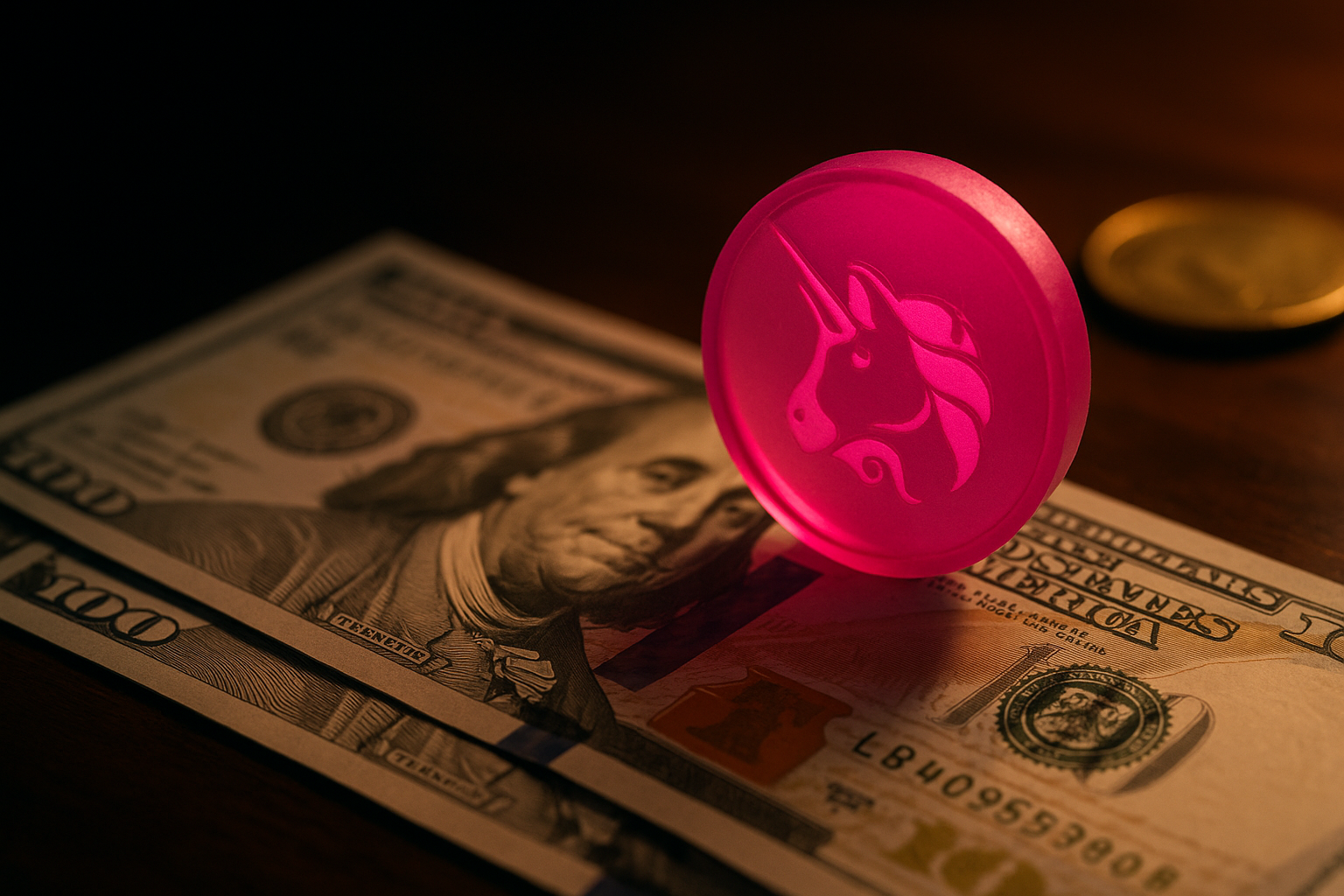
Uniswap, a pivotal decentralized exchange within the DeFi landscape, has triggered renewed attention following the commencement of on-chain voting concerning a transformative governance proposal. This initiative aims to activate protocol fees—a long-discussed revenue model—and implement a mechanism to burn UNI tokens, fundamentally altering its tokenomics and governance economics. The timing is critical, as this shift not only signals community consensus on sustainable revenue strategies but also positions Uniswap to enhance its competitive standing in an increasingly complex decentralized finance ecosystem.
From a market and technical perspective, activating protocol fees is expected to generate ongoing revenue streams directly within the protocol, establishing a recurring value capture that was previously absent. This revenue inflow paired with token burning could contribute to supply contraction, theoretically benefiting UNI holders by introducing a deflationary pressure. Moreover, this proposal underscores the maturation of decentralized governance models, where token holders directly influence system economics and long-term sustainability. It further highlights the increasing sophistication of DeFi protocols in balancing growth incentives with community-led economic adjustments.
Broader industry ramifications extend beyond Uniswap as this move may act as a bellwether for other decentralized platforms contemplating dynamic fee structures and integrated token value mechanisms. It exemplifies how DeFi protocols are evolving from experimental frameworks into robust, economically viable entities capable of competing with traditional finance while maintaining decentralized control. This development might accelerate governance activism and economic reforms across the sector, amplifying discussions around protocol sustainability, governance participation, and aligned incentives in DeFi ecosystems.
Market participants and observers should closely monitor the progression and outcome of the voting process, as its results will determine whether Uniswap embraces this significant economic shift. Subsequent iterations of protocol governance might focus on fine-tuning fee parameters, expanding community engagement, and assessing the broader impacts on liquidity providers and traders. Additionally, the implementation phase will be critical in evaluating the protocol’s adaptability and resilience under new economic parameters.
Historically, announcements of protocol fee activations and token burns in DeFi have been met with increased market enthusiasm due to perceived enhancements in token value capture mechanisms. However, potential risks include community dissent, implementation delays, and unpredictable market reactions. It remains essential for investors and stakeholders to recognize the evolving nature of governance-driven protocol economics without expecting guaranteed outcomes.
Ready to trade with structure, not guesswork?
Join EPIQ Trading Floor and get real-time data, market breakdowns, 24/7 news feeds, and so much more:
https://epiqtradingfloor.com/
Start with a 3-day free trial of the EPIQ All-Access Pass:
https://epiqtradingfloor.com/all-access-pass/


Responses