



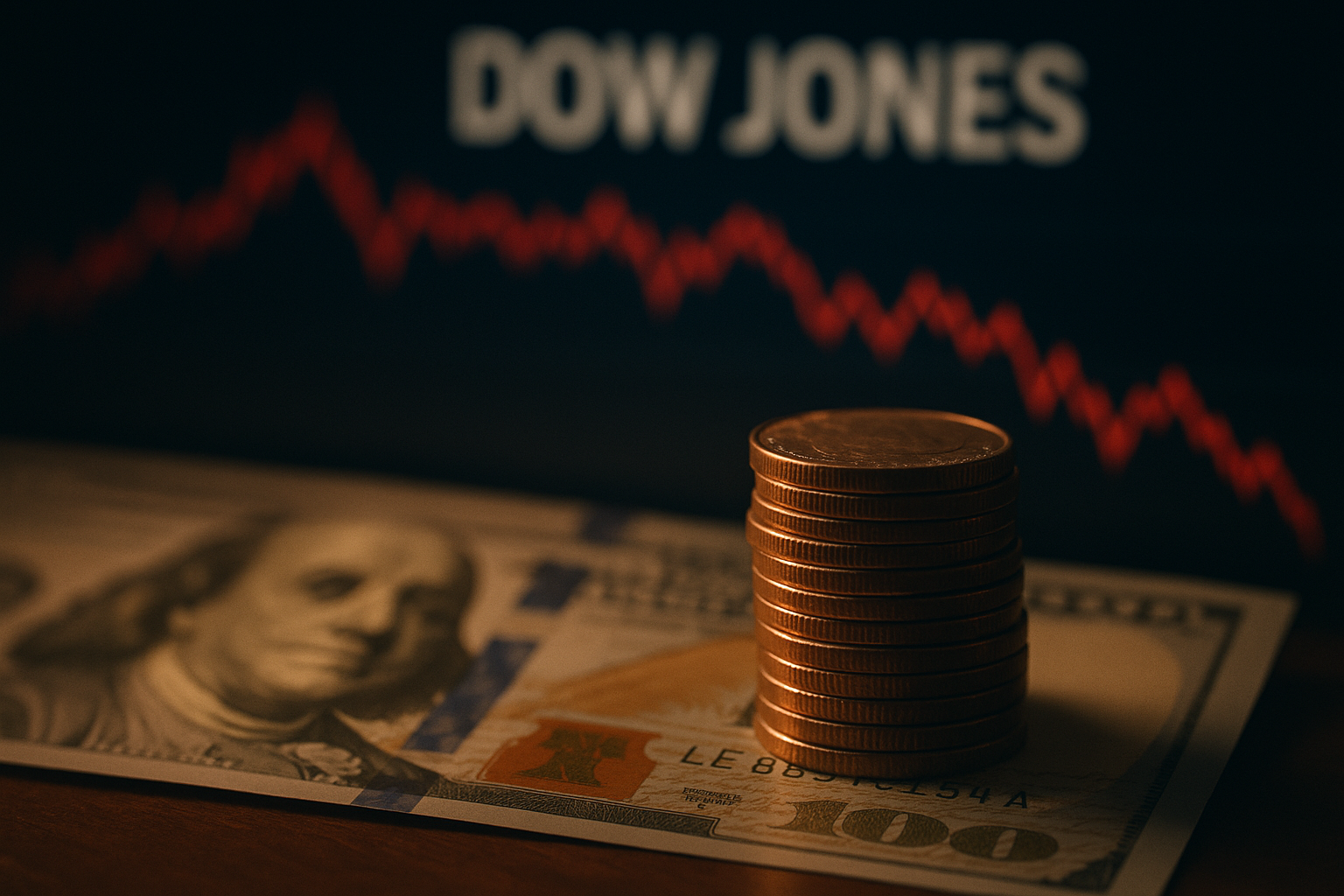
The Dow Jones Industrial Average experienced notable declines following heightened geopolitical tensions sparked by renewed U.S. tariff threats connected to the strategic interest in Greenland. President Donald Trump’s escalated rhetoric on acquiring Greenland, accompanied by proposals for imposing tariffs against key U.S. allies, catalyzed market unease. The timing is critical as global markets are already positioned on edge due to ongoing trade disputes, supply chain disruptions, and shifting alliances, making the Greenland saga a focal point for risk assessment in equity trading.
From a market perspective, the sell-off highlights deep investor sensitivity to geopolitical developments that could hamper international trade dynamics and economic partnerships, especially between the U.S. and its closest allies in Europe. Technical analysts observed heightened volatility indexes coinciding with the Dow’s retreat, reflecting increased uncertainty. The tariff threats not only threaten bilateral trade relations but also risk destabilizing supply chains integral to sectors represented within the Dow, such as manufacturing, energy, and technology, potentially reverberating through global financial ecosystems that depend on stable, predictable economic environments.
This development carries broader implications across industry and macroeconomic domains. Escalations in tariff rhetoric can disrupt cross-border investment flows and dampen growth prospects, while also exerting pressure on multilateral agreements and global cooperation frameworks. For technology and blockchain sectors, which thrive on international collaboration and supply chain integrity, such geopolitical conflicts could accelerate efforts to establish decentralized networks and localized ecosystems that mitigate dependency risks. Furthermore, the heightened geopolitical uncertainty may impact currency markets, commodity prices, and bond yields, signaling a complex risk landscape for institutional and retail investors alike.
Looking ahead, market participants and policymakers should closely monitor diplomatic dialogues regarding Greenland and allied tariff negotiations. Any escalation or resolution will significantly influence risk sentiment and market liquidity. Key indicators include treaty discussions, trade policy announcements, and responses from European and NATO allies, all of which will shape the trajectory of equity indexes and cross-asset valuations.
Typically, such sharp geopolitical-induced sell-offs lead to increased demand for safe-haven assets and cautious positioning in equity portfolios. While short-term volatility spikes are expected, the market’s resilience will depend largely on the clarity of communication from political stakeholders and any substantive steps towards de-escalation. Traders and investors are advised to remain informed of unfolding diplomatic nuances while reassessing exposure to sectors vulnerable to trade disruptions.
Ready to trade with structure, not guesswork?
Join EPIQ Trading Floor and get real-time data, market breakdowns, 24/7 news feeds, and so much more:
https://epiqtradingfloor.com/
Start with a 3-day free trial of the EPIQ All-Access Pass:
https://epiqtradingfloor.com/all-access-pass/







Respuestas