



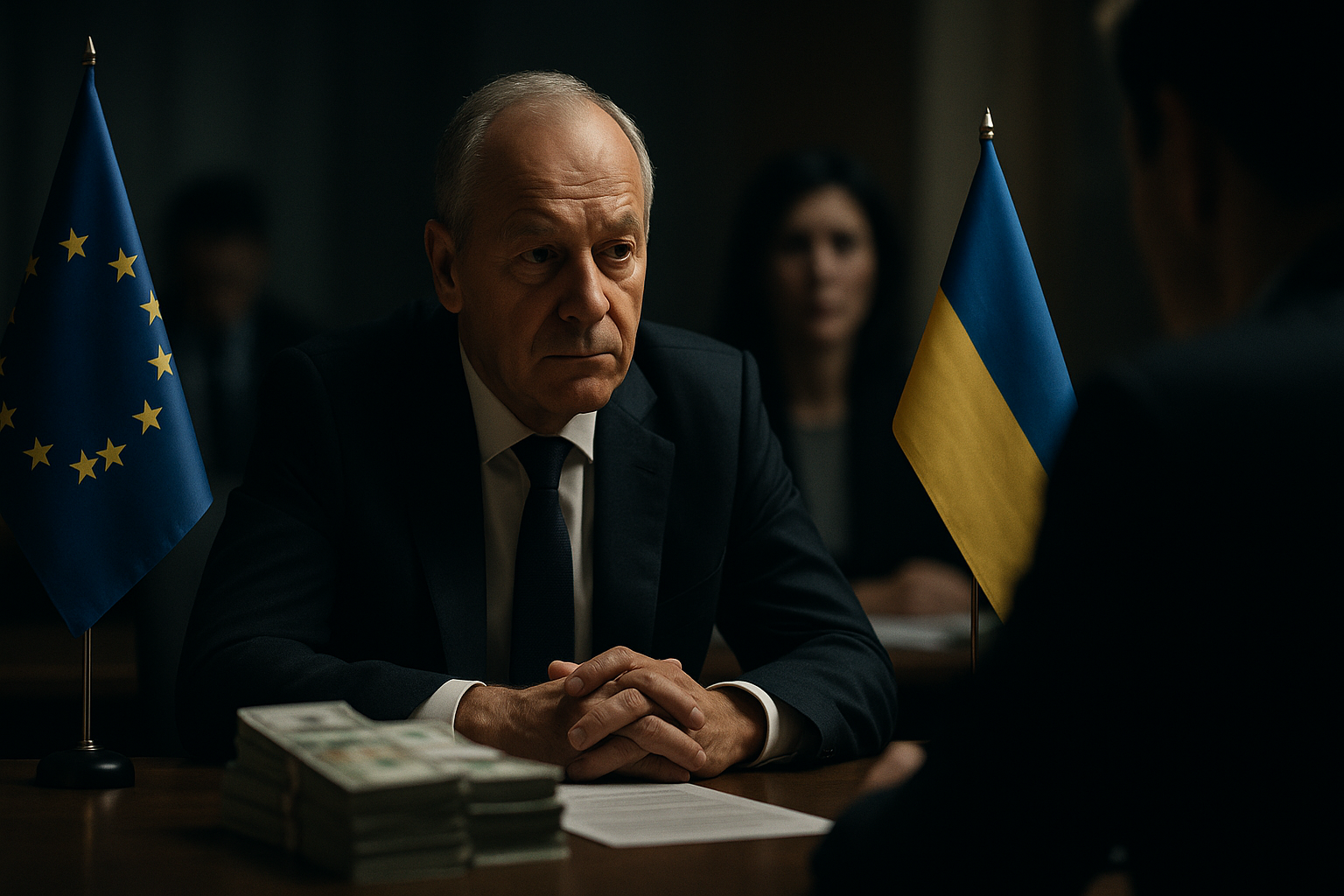
In a crucial summit held in Brussels, European Union leaders reaffirmed their commitment to securing funding for Ukraine amid ongoing geopolitical tensions. The discussions gained heightened urgency as Ukraine’s president, Volodymyr Zelenskyy, participated directly, underscoring the critical nature of financial support during the conflict. This gathering is significant given the EU’s unified stance on backing Ukraine’s sovereignty while navigating internal disagreements over asset utilization.
A notable point of contention emerged around the potential deployment of frozen Russian assets to finance Ukraine’s recovery and defense efforts. Belgium notably stood firm against proposals to repurpose these contested funds, highlighting divergent national positions within the bloc on the legal and ethical considerations involved. This internal resistance introduces complexity into the EU’s fiscal strategy and underscores the intricate balance between legal frameworks, international sanctions, and urgent wartime needs. For the broader financial and technology ecosystems, the mechanism for releasing these frozen assets could set a precedent for state-sanctioned asset reallocation in international conflict scenarios.
Strategically, a unified EU approach toward funding Ukraine not only influences Ukraine’s resilience but also reverberates across global economic systems and security alliances. Commitment to financial support signals the EU’s intent to reinforce regional stability and sustain long-term reform initiatives within Ukraine’s infrastructure and governance. Moreover, the summit’s outcomes may impact broader geopolitical dynamics, including Russia’s economic isolation and the global energy markets pivoting amidst prolonged conflict. This scenario is intricately connected to evolving regulatory environments for cryptocurrency and blockchain assets, as decentralized finance continues to be explored for supporting sanctioned and conflict-affected regions.
Looking ahead, stakeholders will be monitoring the EU’s ability to reconcile member states’ divergent views on asset deployment, as well as the timeline for concrete financial aid disbursements. The outcome will likely influence not only Ukraine’s short-term recovery but also the EU’s collective capacity to respond swiftly and cohesively in future international crises. The summit’s deliberations hint at the potential development of new protocols for asset management under sanctions regimes, which could have lasting implications for financial compliance and blockchain monitoring technologies.
Ready to trade with structure, not guesswork?
Join EPIQ Trading Floor and get real-time data, market breakdowns, 24/7 news feeds, and so much more:
https://epiqtradingfloor.com/
Start with a 3-day free trial of the EPIQ All-Access Pass:
https://epiqtradingfloor.com/all-access-pass/




Respuestas