



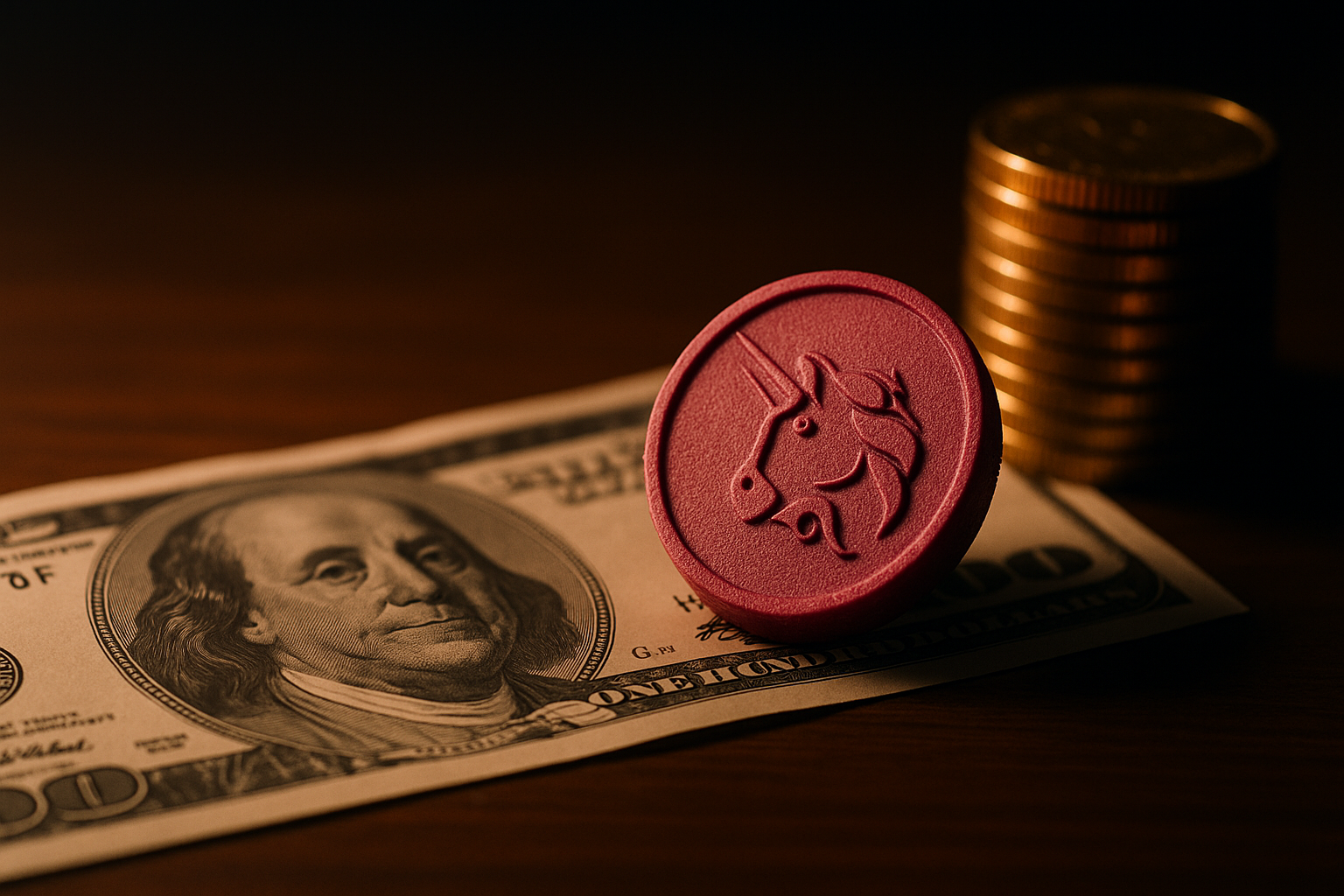
Uniswap, one of the leading decentralized finance (DeFi) protocols, is on the brink of a major governance milestone following an emphatic community vote in favor of implementing the so-called “fee switch.” Capturing support from 99% of voting UNI tokens, the proposal signals a consensus to activate a mechanism allowing the protocol to collect a portion of trading fees. This decisive outcome reflects both the community’s confidence in Uniswap’s long-term vision and the growing maturity of DeFi governance structures. The quorum surpassed 69 million UNI tokens, underscoring the robust engagement from stakeholders eager to reshape the protocol’s economic model.
The approval of the fee switch opens the door to significant technical and market implications. By redirecting a fraction of trading fees back to the protocol itself, Uniswap could initiate a systematic token burn, reducing UNI’s circulating supply over time. This deflationary pressure aims to improve token scarcity, potentially enhancing governance incentives and aligning user interests with sustainable growth. Technically, incorporating the fee switch requires close coordination among core developers to ensure seamless integration with existing smart contracts and liquidity pools, reinforcing the protocol’s security standards.
Beyond Uniswap’s immediate ecosystem, this development marks a notable trend within the broader DeFi landscape toward modular and community-driven revenue models. As more protocols experiment with fee redirection and tokenomics adjustments, the industry continues evolving from purely utility-focused tokens to ones with integrated economic sustainability frameworks. This shift may influence governance practices and investor sentiment across decentralized exchanges and DeFi platforms. It also prompts closer scrutiny regarding the transparency of fee allocations and the governance mechanisms guarding protocol upgrades.
Looking forward, attention will center on the timeline and implementation details of the fee switch activation. Key indicators include governance proposals outlining exact fee percentages, scheduled token burns, and monitoring on-chain activity to assess real-time impacts on liquidity providers and market participants. The industry will also observe how this move affects UNI’s role within the competitive decentralized exchange environment, potentially setting a precedent for similar initiatives by peers.
Market sentiment surrounding this vote has been broadly positive, reflecting confidence in Uniswap’s adaptability and community governance. Traders and liquidity providers are watching how these protocol enhancements will influence transaction costs, reward structures, and token valuation dynamics. While the fee switch introduces a new layer of complexity, the consensus-driven approach demonstrates DeFi’s commitment to iterative improvement aligned with participant interests.
Ready to trade with structure, not guesswork?
Join EPIQ Trading Floor and get real-time data, market breakdowns, 24/7 news feeds, and so much more:
https://epiqtradingfloor.com/
Start with a 3-day free trial of the EPIQ All-Access Pass:
https://epiqtradingfloor.com/all-access-pass/







Respuestas