



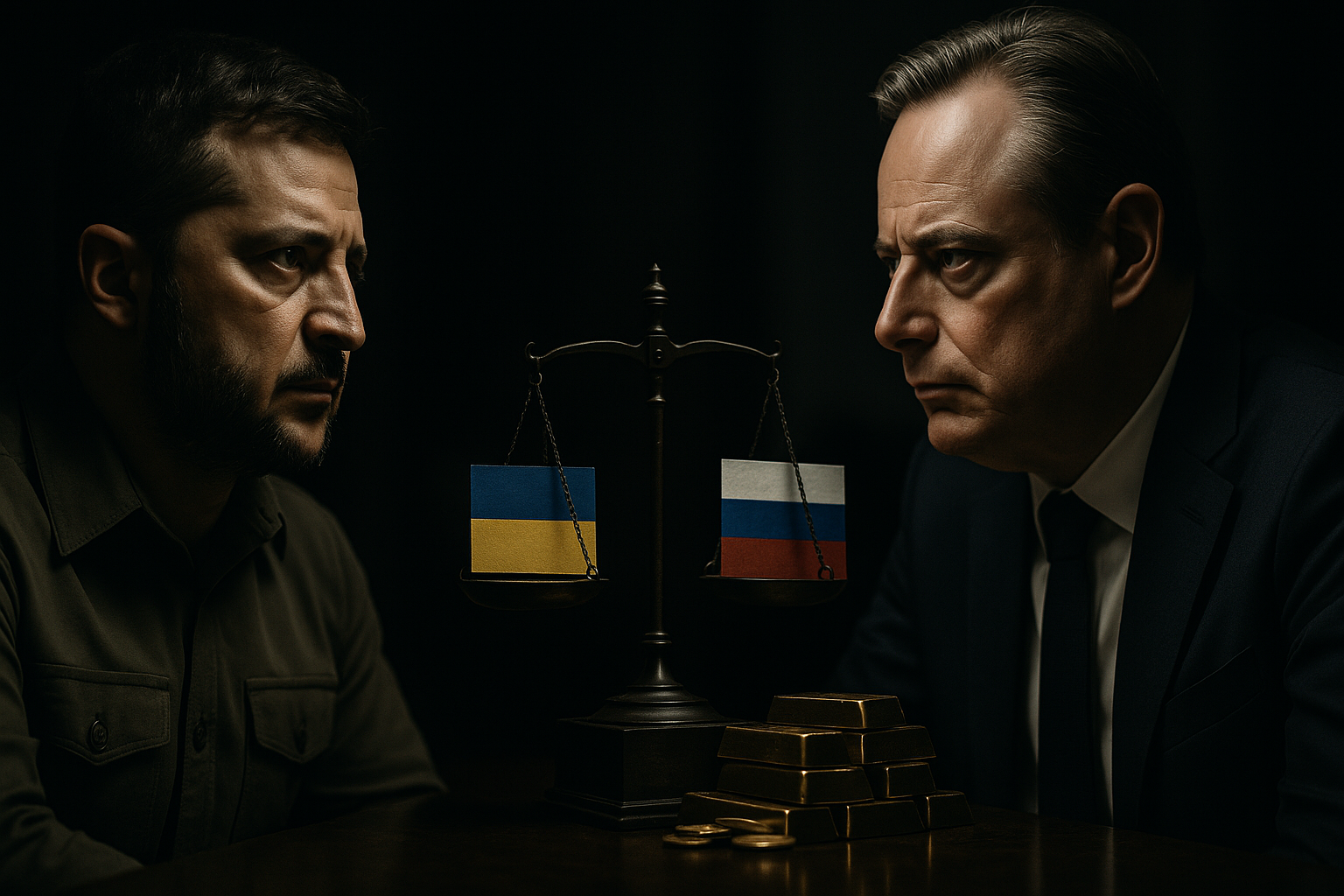
The recent standoff between Ukrainian President Volodymyr Zelenskyy and Belgian politician Bart De Wever over the loaning of frozen Russian assets underscores a pivotal moment in the ongoing geopolitical tussle involving asset reallocation and post-conflict restitution. This confrontation arrives at a time when countries are navigating complex international sanctions regimes designed to limit Russian financial power in response to the Ukraine conflict. Zelenskyy’s firm stance highlights the urgency for transparent, equitable mechanisms governing the disposition of seized state-held assets, illustrating broader questions on sovereignty, legal frameworks, and international accountability.
From a financial and regulatory perspective, the dispute has significant implications for the emerging norms around sovereign asset management in conflict scenarios. The frozen assets represent billions in liquidity previously controlled by sanctioned entities, and their potential redistribution or utilization via loans involves intricate considerations of international law, bilateral agreements, and the stability of affected economies. How these funds are managed influences market confidence and sets precedents for future policy enforcement in the geopolitical finance arena.
This episode also reverberates across international relations and economic diplomacy, affecting not only Ukraine and Belgium but also regional alliances and global sanction policies. The debate exposes the delicate balancing act between punitive economic measures and pragmatic cooperation to support recovery and rebuilding processes. Moreover, it throws light on Mercosur’s similar challenges regarding economic integration and external pressures, reinforcing the interconnectedness of global economic governance frameworks amid conflicting national interests.
Watchers of international finance and policy reform should closely monitor developments around the legal clarifications and political negotiations unfolding from this confrontation. The outcomes here may influence legislative proposals in supranational bodies concerning asset freezing and repurposing mechanisms, impacting sectors from sovereign debt markets to cross-border capital flows. Further, the political dynamics might shape future collaboration models among sanctions-imposing nations and affected states.
Market sentiment in geopolitical finance circles tends to oscillate with such high-stakes disputes, often introducing caution into risk assessment frameworks and asset valuations tied to affected jurisdictions. Investor focus may shift toward regulatory clarity and political stability signals emanating from these contested asset agreements, underscoring the importance of governance resilience in maintaining international financial ecosystem confidence.
Ready to trade with structure, not guesswork?
Join EPIQ Trading Floor and get real-time data, market breakdowns, 24/7 news feeds, and so much more:
https://epiqtradingfloor.com/
Start with a 3-day free trial of the EPIQ All-Access Pass:
https://epiqtradingfloor.com/all-access-pass/





Respuestas